Pages

Search This Blog

Tuesday, January 29, 2013

AIR

Hello internet. The last time I posted, it was about water. Today I'm going to talk about air.

Now, when people say "air", they mean oxygen (usually). But when they say "air" as in "the air in Earth's atmosphere", it's a lot more than oxygen. Air is mainly composed of mainly nitrogen, oxygen, and other trace gases (carbon dioxide, argon, methane, etc.). Let's talk about nitrogen first.

Liquid Nitrogen
Nitrogen is a chemical element with symbol N and atomic number 7. Elemental nitrogen is a colorless, odorless, tasteless, and constitutes 78.09% of the Earth's atmosphere. Nitrogen is a common element in the universe, estimated at about seventh in total abundance in our galaxy and the Solar System. Nitrogen is far less common on the rocky planets of the inner Solar System, and it is a relatively rare element on Earth as a whole. One of the most interesting factors of nitrogen is its liquid form. Liquid nitrogen acts as a cyrogenic liquid. Liquid nitrogen boils at -195.8°C. Liquid nitrogen is sometimes used as a refrigerant, like the purpose as dry ice (more on that later).


Liquid oxygen. Beautiful, huh?
Now then, we move on to oxygen. Oxygen is essential for life, but a wise man said "There are many things are good, but too much of those things are bad". Oxygen is a chemical element with symbol O and atomic number 8. Its name derives from the Greek roots ὀξύς (oxys) ("acid", literally "sharp", referring to the sour taste of acids) and -γόνος (-gοnos) ("producer", literally "begetter"), because at the time of naming, it was mistakenly thought that all acids required oxygen in their composition. At standard temperature and pressure, two atoms of the element bind to form dioxygen, a colorless, odorless, tasteless  gas with the formula O2. This substance is an important part of the atmosphere, and is necessary to sustain most terrestrial life. As a liquid, oxygen is a beautiful pale blue liquid. If you want to learn about carbon dioxide, click here. If you want to learn about argon, click here.

Interesting fact of the day: On December 16th, 1811, the mighty Mississippi river began to flow backwards due to a powerful earthquake.

Wednesday, January 23, 2013

WATER

Hello internet. Today I will be talking about water physically and atomically, and the benefits of it.

Water is a chemical compound with the chemical formula H2O. A water molecule contains one oxygen and two hydrogen atoms connected by covalent bonds. Water is a liquid at temperatures above 0 °C (273.15 K, 32 °F) at sea level, but it often co-exists on Earth with its solid state, ice, and gaseous state (water vapor or steam). Water also exists in a liquid crystal state near hydrophilic surfaces.


Water covers 71% of the Earth's surface, and is vital for all known forms of life. On Earth, 96.5% of the planet's water is found in oceans, 1.7% in groundwater, 1.7% in glaciers and the ice caps of Antarctica and Greenland, a small fraction in other large water bodies, and 0.001% in the air as vapor, clouds (formed of solid and liquid water particles suspended in air), and precipitation. Only 2.5% of the Earth's water is freshwater, and 98.8% of that water is in ice and groundwater. Less than 0.3% of all freshwater is in rivers, lakes, and the atmosphere, and an even smaller amount of the Earth's freshwater (0.003%) is contained within biological bodies and manufactured products.

The color of water is colorless to the human eye in small amounts, but when it's in large quantities, it has a blue hue. Most people (including teachers) say that the ocean is blue because it reflects the blue sky. While this is one of the reason why it's blue, it's not the main reason. And also, while covering water is slightly blue, air is also slightly blue. More on that later. Or the next post. ;)


Interesting fact of the day: The only animal that has 4 knees is the elephant.

Wednesday, January 16, 2013

5 most deadliest animals

Hello internet. The question I'm going to answer is "What are the 5 deadliest animals in the world?" Well, I'll tell you and some more. That's right. I'm telling not 5, but 8!

The Box Jellyfish drifting about
1. The Box jellyfish (Chironex Fleckeri). The Box Jellyfish is highly venomous, while one sting could kill you in a hour or less. The tentacles have 500,000 cnidocytes, containing nematocysts, a harpoon-shaped mechanism that injects venom into the victim. However, I should have said the world's most venomous and treatable animal. That means that, yes, the venom is dangerous, but only if left untreated. By the way, sea turtles are unaffected by the stings, and are the predators of Box jellyfishes.could kill you in a hour or less. The tentacles have 500,000 cnidocytes, containing nematocysts, a harpoon-shaped mechanism that injects venom into the victim. However, I should have said the world's most venomous and treatable animal. That means that, yes, the venom is dangerous, but only if left untreated. By the way, sea turtles are unaffected by the stings, and are the predators of Box jellyfishes.


The Blue-ringed octopus swimming
2. The Blue-ringed octopus (Hapalochlaena lunulata) The blue-ringed octopus is 12 to 20 cm (5 to 8 in), but its venom is powerful enough to kill humans. No blue-ringed octopus anti venom is available yet. The octopus produces venom containing tetrodotoxin, the major neurotoxin component of blue-ringed octopus venom was later found to be 10,000 times more toxic than hydrogen cyanide. Tetrodotoxin blocks sodium channels, causing paralysis and respiratory arrest within minutes, leading to cardiac arrest due to lack of oxygen. The toxin is made by bacteria in the salivary glands of the octopus. Their venom can result in nausea, breathing difficulty, heart attack, total paralysis, blindness, and can lead to death within minutes.

3. The Cone Snail (unknown; I can't find the biological name
One drop of venom from this little bugger is enough to end 20 human lives. Sometimes colloquially known as the “cigarette snail,” it has been said that when you are stung by this creature, you’ll have just about enough time to smoke a cigaret before you stop breathing. It’s not like it matters anyway though…there is no antivenom.


The inland taipan ready to strike
4. Inland Taipan (Oxyuranus microlepidotus) is heavily regarded as the most venomous snake in the world. However, this snake, even though it has untreatable venom, it's actually highly reclusive and shy. However, when it needs to attack, it doesn't bite once and go away. Instead, in a single attack from this snake, it bites up to seven quick bites that kill instantly. It's diet is mainly rodents and insects, but sometimes, that one unlucky human will fall to the snake.

5. Komodo Dragons (Varanus komodoensisare not picky eaters. They will eat anything from birds to water buffaloes to humans and they have even been known to dig up bodies from shallow graves. They are prodigious hunters and will wait stealthily until their prey approaches after which they will charge forward, rip out its throat, and retreat while it bleeds out. Once again, like Polar Bears, the only reason their human kill count is so low is probably due to limited interaction as well as the fact that they only really need to eat once a month.

The cute, but deadly poison dart frog
6. Poison dart frog (Dendrobatidae azureusPacked into 2 inches of colorful amphibian is enough poison to kill an army of 20,000 mice. This means that with roughly 2 micrograms, or the amount that would fit on a pinhead, you could successfully stop the heart of a large animal. And to make matters worse, the poison is actually located on the surface of the skin. Can I get a "You can't touch this!"

7. The Brazilian Wandering Spider (Phoneutria nigriventer)  Meet the most venomous spider in the world, according to the Guinness Book of World Records. What makes this critter so dangerous though is also how it got its name – a tendency to wander. They are often found hiding in houses and cars of densely populated areas, especially during daytime. Not a very good combination at all.

8. You probably wouldn't believe this, but, The Mosquito (family: cullicidaeMoving from one of the largest animals in the world we now come to one of the smallest. As small as it is though, it is also the deadliest. It has been estimated that mosquitos transmit diseases like malaria to almost 700 million people annually resulting in 2 to 3 million deaths every year.

Interesting fact of the day: Many people who read the word yawn or yawning begin to feel the urge to yawn. I know I did.

Wednesday, January 9, 2013

What's IQ?

Hello internet, we're going to talk about IQ today. The question I'm going to answer today is "What is IQ anyways?" and "Who has the largest IQ?"

IQ stands for intelligent quotient. Instead of comparing your IQ score to the world, IQ compares your score relative to the people in your age group. Here's the list of the scores

A score of...
  • 65 is dull and borderline dumb
  • 75 is not that bright
  • 85 is pretty below average
  • 100 is average intelligence
  • 115 is above average
  • 125 is bright
  • 135 is gifted
  • 145 is genius
  • 155 is good for a PhD
  • 165 is really intelligent
  • 175 is almost as much as Albert Einstein
  • 185 is almost as much as Stephen Hawking
  • 195 is superior intelligence
  • 200 is deemed unmeasurable
The one of the people that has the highest IQ in history is William James Sidis. He scored an almost unmeasurable 197. I scored a 128 on my IQ test, but remember, I scored a 128 relative to the people in my age group.

Interesting fact of the day: Over 3 million people globally every month search for something online with the words interesting facts in it according to Google, Yahoo!, and Bing. Also, buttermilk does not contain any butter.

Tuesday, January 8, 2013

Teleportation?

Hello internet, so today, I going to talk about teleportation. So the question here is "Did we make any teleportation machines yet, and can humans go in it?"

The answer is yes, we have made one! We do it from a process called "quantum entanglement". But as for the "beaming up" in the Star Trek movies, there's no hope at all or we're a very long way off.

Anyways, what is quantum entangling when you teleport? When you teleport something using the quantum entanglement method, the object gets copied, then entangled with the copy, then the original object that got copied gets destroyed, leaving a teleported object.

However, humans cannot go into this teleportation method for two main reasons.


  • The human body has just too much information. We cannot go into this or else your legs might be sticking out of out our head, or your organs inside out!
  • The "destroy the old copy" bit tends to...kill you.

So yeah, we really need to revise this. But there are much safer ways to travel!

Interesting fact of the day: Yahoo actually got offered to buy Google for $1 million, but Yahoo turned down the offer. Now,it's worth about $200 billion, while Yahoo is worth about $20 million. If you want to see more facts about Google, click here.

Sunday, January 6, 2013

5 rare animals

Hi everyone, so today, after the "8 common misconceptions", I have for you the 5 possibly rarest animals in the world. Scientists estimate that at least 27,000 species go extinct every year, never to be seen again. A recent one that vanished are the Pinta Island Tortoises. The last one of the subspecies was nicknamed "Lonesome George". He died at June 24, 2012, making the species extinct.


File:Linces1.jpg
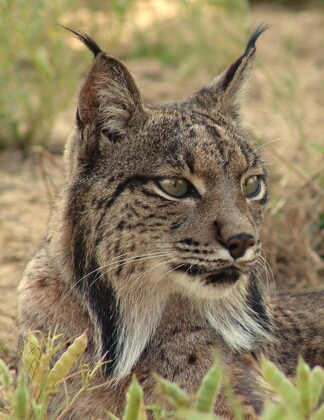
The Iberian lynx
1. The Iberian lynx (lynx pardinus) is a critically endangered species and is one of the rarest cats in the world with only about 100 of them left. According to the "conversation group SOS lynx", if the lynx died out, if would be the first feline species to die out since the prehistoric times, when the last feline species, the saber-toothed cat died out ten thousand years ago. They are native to Spain and Portugal, where they're dying because of hunting and habitat loss due to humans.


The Pygmy Tarsier
2. The Pygmy Tarsier (tarsius pumilus). This primate was a species was thought to be extinct for 85 years until some researchers found a handful of them in the mountains of Indonesia. Disease and habitat loss caused their numbers to go drastically decline. If the pygmy tarsier goes extinct, we will have lost the only carnivorous primate in the world because they only eat insects.

3. The Javan Rhinoceros (rhinoceros sondaicus). Little is known about this species. This rhino was widespread throughout Asia, but now, there is only about 40 Javan rhinoceros in the wild.

File:Corvus hawaiiensis FWS.jpg
The Hawaiian Crow
4.  The Hawaiian Crow or 'Alalā (corvus hawaiiensis). This omnivorous bird is (according to the International Union for Conversation of Nature's Red List) known to be extinct in the wild. There are only about 100 of them left, and all of them are held in captivity, away from predators and diseases. They used to inhabit dry and mesic forests on the slopes of Mauna Loa and Hulālai.

5. The Baiji Dolphin (lipotes vexillifer) is a freshwater dolphin only found in China's Yangtze river. They are nicknamed the "Goddess of the Yangtze". The Baiji is functionally extinct, meaning that there are so few left (about 2 or 3 left) that not enough is needed to mate and reproduce the species.

Interesting fact: House flies buzz in the key of F.

Thursday, January 3, 2013

8 common misconceptions

Hello internet. So today, I want to share with you 10 common misconceptions I learned. If you want to learn more, you can follow this link to go CGP Grey's channel on youtube to learn many interesting things. Link: http://www.youtube.com/user/CGPGrey

1. "The Great Wall of China is the only man-made object visible from space."
In order to view something visible from space, it would have to be pretty big. And the Great Wall of China certainly is. But it's only 30 feet across at its widest, so even a picture from the international space station, a lake is bigger. So you cannot view it from space. As for the "man-made" part, the man-made lights from cities and towns are visible from space.

2. "Cracking your knuckles causes arthritis."
Socially obnoxious? Yes. Gives you arthritis later in life as a punishment? No.

3. "You need 8 glasses of water per day."
You do need to drink water, but there are no scientific evidence that you need to drink  8 glasses per day, but some evidence say that 8 glasses are too much...

4. "Blood in veins are blue."
The idea here is that blood in veins are blue and only turn red when exposed to oxygen. The next time when you get blood drawn from your vein, what color is it? Red. Well, dark, maroonish red.

5. "An ostrich will stick its head in the sand when threatened."
Keeping in mind that ostriches are up to five feet tall, have long beaks and claws, and are aggressive, why would they hide? Sure, they will run away or hide from predators, but not in the stupidest way possible. When you threaten one, if you're lucky, they will run away at forty miles per hour. If your not lucky, then hope that it doesn't tear off your flesh before you fall unconscious from its nasty kicks.

6. "A mother bird will abandon her baby if a human touches it."
A mother bird will not abandon her baby if you touch it any more than a human mother will abandon her baby if a bird touches it. If you find one, put it back into its nest, the mother will not abandon it.

7. "Goldfish only have a memory of up to 7 seconds."
Goldfish can actually be trained and remember what they've learned for months afterwards.

8. "All bats are blind."
If you ever looked at a bat, they will look back right at you...with their eyes...which they use to see things...but they have an additional sense called "echo-location" which they use to navigate the world through darkness. So at night, to them, you are the blind one.

Interesting fact of the day: The carpenter ant, otherwise known as the exploding ant is pretty self-explanatory. When fighting with something and knows it will lose, they get as near as possible to its predator and voluntarily ruptures itself by compressing its abdominal muscles in on a poison gland so hard, it literally explodes itself, causing poison to splatter everywhere.